
A homeowner calls about a leak, you climb the roof, measure, take photos and send a detailed estimate. Then nothing happens. No yes, no no, just silence. That silence doesn't have to be part of the job. Quotes usually go unanswered for a small set of predictable reasons, and most of them are fixable with a clear follow-up routine rather than more sales pressure.
Here is why estimates stall, a respectful follow-up schedule, and what you can automate without sounding like a robot.
Why roofing quotes go unanswered
Silence rarely means "no." More often it means one of these:
- The homeowner is collecting other bids. Roofing is a large purchase, and comparing two or three estimates is normal.
- The estimate is hard to read. A PDF full of line items and material codes can be hard to compare against a competitor's one-page quote.
- Another decision-maker is involved. A spouse, a landlord, an HOA or an insurance adjuster may need to weigh in.
- The timing changed. The leak got patched temporarily, money got tight, or the season shifted.
- They simply forgot. Your email landed between a school notice and a utility bill.
Only the first of these is about price. The rest are about clarity, timing and staying visible. That is good news, because those are things you control.
Make the estimate easy to say yes to
Follow-up works better when the estimate itself is clear. Before you think about reminders, check that every quote:
- Opens with a one-paragraph summary: the problem, what you recommend and the total.
- Separates must-do work from optional upgrades, so the homeowner can compare like with like.
- Includes a few photos of what you found on the roof, with short captions.
- States how long the price is valid and what could change it, such as hidden deck damage.
- Ends with one clear next step, like "Reply YES or book a time to go over it."
A homeowner who understands the quote in two minutes is far more likely to reply.
A follow-up schedule that isn't pushy
The goal is to stay helpful and visible, not to chase. A simple schedule you can adapt:
- Same day: Send the estimate with a short personal note and confirm it arrived.
- Day 2: A quick text: "Did the estimate come through OK? Happy to walk through it by phone."
- Day 5–7: Offer something useful, such as an answer to a common question about materials or warranties, or an offer to meet whoever else is deciding.
- Day 14: A direct but polite check-in: "Are you still planning the repair, or should I close this out for now?"
- Day 30–45: A final, low-pressure note, ideally tied to something real, like the start of storm season or a scheduling opening.
Stop when they answer, either way. A clear "we went with someone else" is useful, and one short question about why improves your next quote.
What to automate, and what to keep personal
Automation should handle memory, not relationships. Good candidates:
- Creating a follow-up task the moment an estimate is sent, so no quote depends on someone's memory.
- Sending the day-2 "did it arrive" text and the day-14 check-in from templates you wrote.
- Alerting the estimator immediately when a homeowner replies, opens the quote or clicks "book a call."
- Pausing every reminder automatically once the customer responds.
Keep the conversation itself human. When someone replies with a question about shingles or financing, a real person should answer quickly. Our article on why leads go cold explains why response speed matters so much, and the 5-minute reply for home-service companies shows how to get there without an office person.
If you text customers, make sure you have their consent and that your messages follow the carrier and legal rules for business texting. When in doubt, ask your attorney.
Track every estimate in one place
Most lost quotes are lost in a spreadsheet, an inbox or a truck's glovebox. At minimum, track for each estimate: the customer, address, amount, date sent, status (sent, viewed, follow-up, won, lost), the next follow-up date and the reason if lost.
A shared sheet works for a small crew. As volume grows, a simple CRM built around how your team works keeps follow-ups from slipping. That is what we build with custom CRM projects, and it is a core part of our home services work.
Measure what is actually happening
After a month or two, look at your own numbers rather than industry averages:
- How many estimates did you send, and how many got any reply?
- How many days passed, on average, between estimate and decision?
- At which step do most replies arrive?
- What reasons do lost customers give?
These answers tell you whether to fix the estimate format, the follow-up timing or the price. They also show whether your process lets you never miss a lead from the first call onward. Once a job is finished, the same system can ask happy customers for a review; see how to get more Google reviews.
Frequently asked questions
How many times should I follow up on a roofing estimate?
Four or five touches over about a month is a reasonable range for most homeowners, as long as each message is short, useful and easy to answer. Stop as soon as they reply.
Should I follow up by text, email or phone?
Use the channel the homeowner used to reach you, and ask early which they prefer. Texts work well for short check-ins, while email suits the estimate itself.
Can follow-up be automated without sounding robotic?
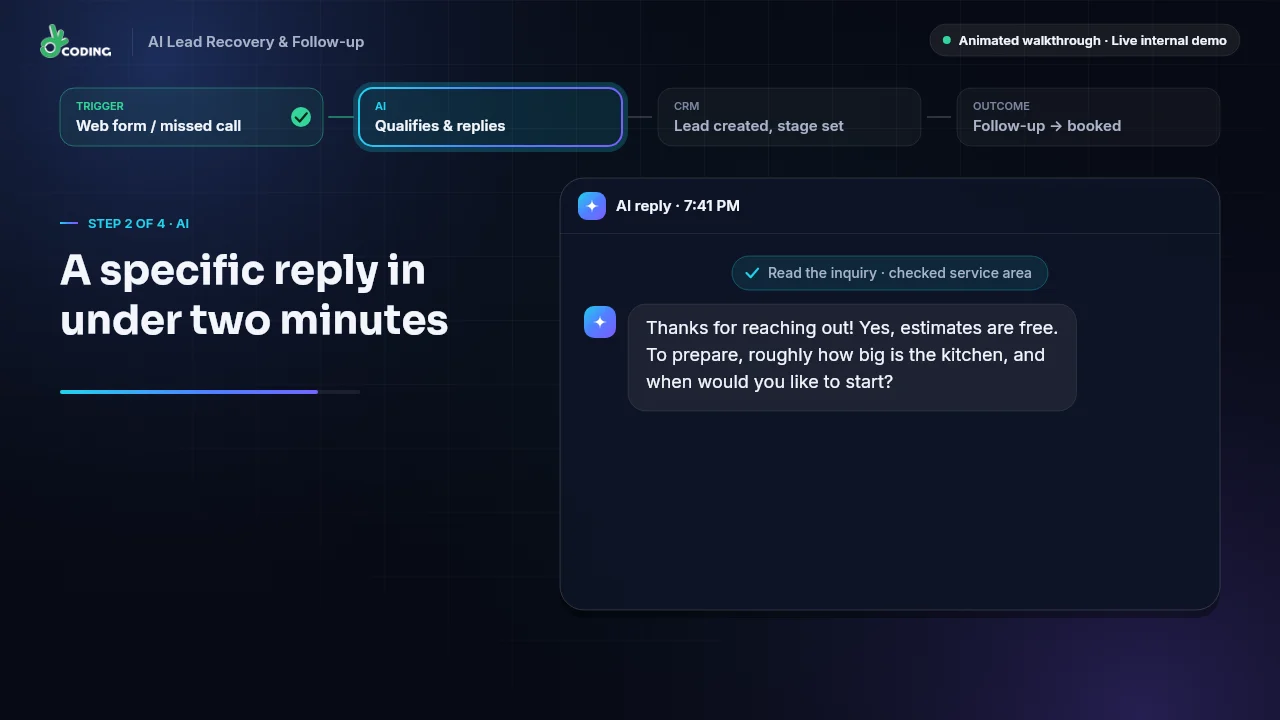
Yes, if you write the templates in your own voice, keep them short and stop reminders the moment a person replies. The AI lead recovery demo shows a version of this flow.
Want a follow-up system for your estimates? Book a call and we will map it with you.
This article describes approaches and how our demos behave. It does not report measured customer outcomes unless it says so with methodology and permission.