
A homeowner with a leaking water heater sends the same request to three companies. The first one to reply with something specific usually gets the job. If your crew is on site all day and the office is you, in a truck, that first reply is the hardest thing in your business to guarantee.
This is a practical plan for home-service companies (plumbing, HVAC, electrical, cleaning, landscaping, remodeling) to answer every lead within five minutes, book the estimate, and follow up, without hiring someone to sit by the phone.
Where the leads actually come from
Before automating anything, list the doors. For most home-service companies it is some mix of:
- Website form
- Phone calls, half of them missed
- Text messages to the business number
- Google Business Profile messages
- Facebook or Instagram messages
- Lead marketplaces that email you a request
Each door has a different response pattern, and the leads that leak are the ones arriving through doors nobody is watching at that hour. The goal is one place where all of them land and one system that replies to all of them the same way.
The first reply: specific beats fast
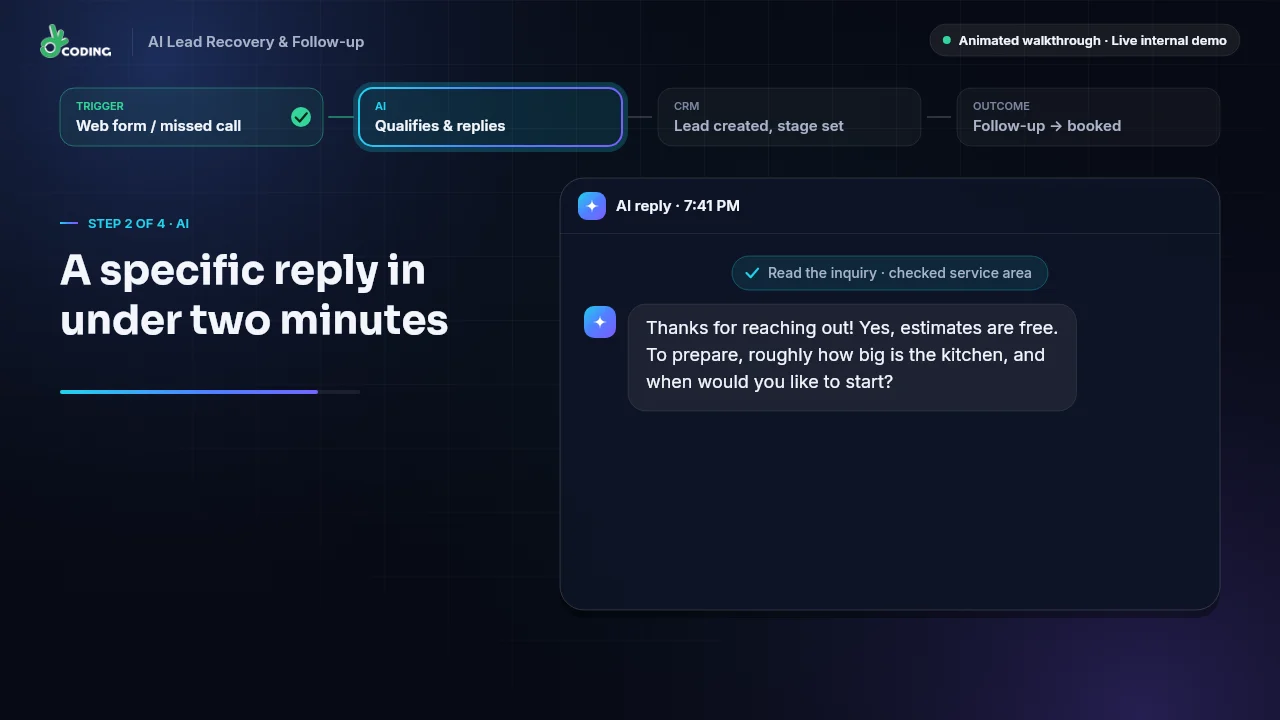
Speed matters, but a generic "thanks, we'll be in touch" wastes it. A good first reply does three things in three sentences:
- Shows you read it: "Sounds like the water heater is leaking from the bottom."
- Asks the one or two questions your estimator would ask anyway: "Gas or electric? Roughly how old?"
- Moves to a next step: "I can have someone out tomorrow between 8 and 10 or 1 and 3. Which works?"
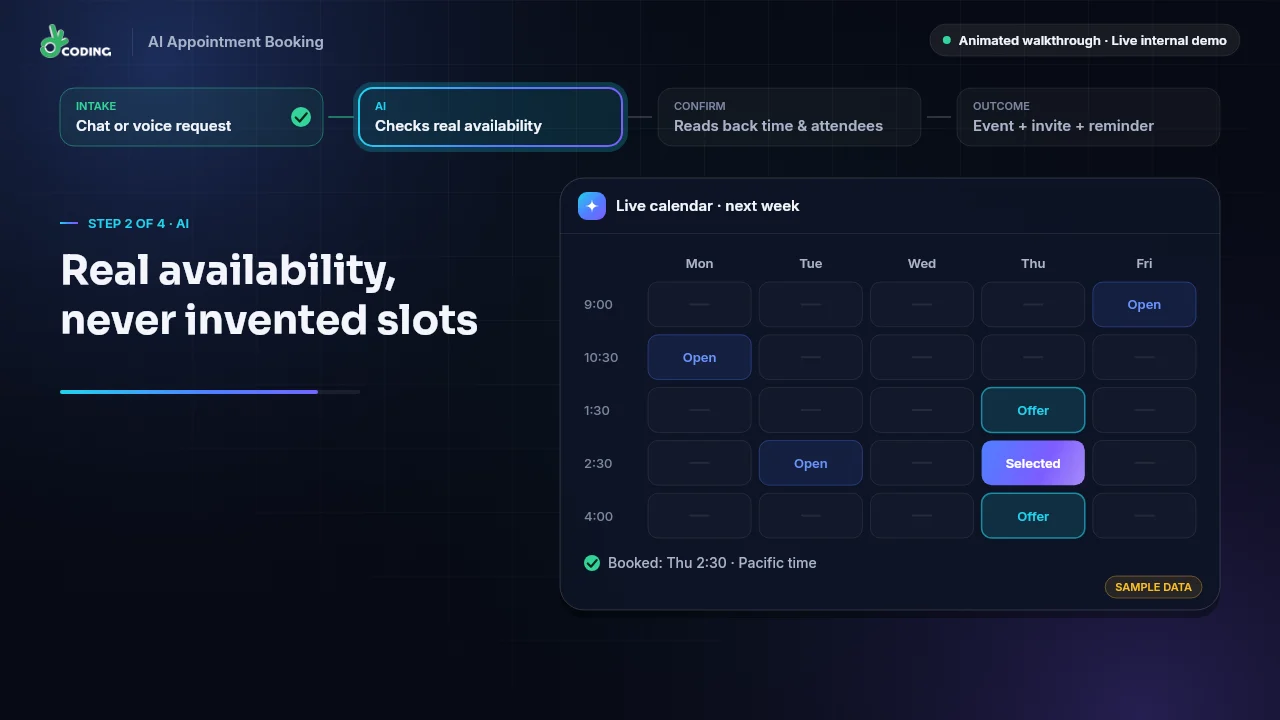
An assistant can send that reply in under a minute, from the information in the request, on every channel, at any hour. When the homeowner answers, it continues the conversation, collects the address and the photos, and offers real estimate windows from your calendar. Our lead recovery demo shows the first reply and the follow-up sequence; the booking demo shows the scheduling half.
What stays with you
The assistant does not quote. "How much to replace a water heater?" gets your policy ("we price after a quick on-site look; the estimate visit is free") and a time slot, not a number. Anything about safety ("I smell gas") is routed to a person immediately with a clear instruction to the homeowner. The assistant books the estimate; your estimator does the estimating.
Estimate windows that do not double-book
Home-service scheduling is harder than office scheduling because jobs have travel time and run long. Two rules keep it sane:
- Windows, not minutes. Offer two-hour arrival windows, and attach a buffer after each job so one overrun does not cascade.
- Read the real calendar. The assistant offers only windows that are open in the calendar your crew already uses. When a job is booked, it is on that calendar instantly, with the address, the problem and the photos.
After the estimate: the follow-ups that win the job
Sending the estimate is where many companies stop, and where most of the money is lost. Three automatic follow-ups change the outcome:
- 24 hours after the estimate, if there is no answer: a short message asking whether they have questions. Not a discount. Just presence.
- When they say yes: a confirmation with the job date, what to expect, and what to clear out of the way.
- The day before the job: arrival window, technician's name, and a way to reschedule.
And after the job: a review request the next day, only to customers who did not have a complaint, and a maintenance reminder when the next service is due.
What this looks like for a small crew
A three-truck plumbing company does not need software for the sake of software. It needs: every lead answered in minutes with the right questions, estimates booked into the calendar without a phone call, and follow-ups that happen whether or not anyone remembers. That is a focused setup around the tools you already have, a calendar, a phone number, maybe a simple CRM, not a platform migration.
If you want to see how it would work with your specific doors and your calendar, book a short call. A specialist will map where your leads come from, where they leak, and whether this is worth doing at your volume. Sometimes the honest answer is "forward your calls to a cheap answering service for now," and we will say that.
This article describes approaches and how our demos behave. It does not report measured customer outcomes unless it says so with methodology and permission.