
Someone searching for a lawyer rarely contacts just one firm. They fill out your form, then call the firm two results down. The firm that replies first, clearly and professionally, usually gets the first real conversation. That is what "speed to lead" means for a law firm: how long it takes from the moment a prospective client reaches out to the moment a real person, or a well-designed automated reply, responds.
Below: where delays come from, what a good first reply says, and what you can safely automate. If you want the broader intake picture first, read our guide to law firm client intake automation.
This is not legal advice. Check your own state bar's rules before changing how your firm handles inquiries.
Why the first reply matters more than the website
A good website gets the inquiry. The reply decides what happens next. People contacting a law firm are often stressed: they were just served, arrested, injured, or fired. A silent inbox for six hours tells them nobody is listening, even if your firm is excellent.
Firms rarely lose these leads because of slow legal work. They lose them because nobody owns the inbox after 5 p.m. or the receptionist is on another call. Those are process problems, and they can be fixed.
Where the delays actually come from
Before adding any tool, map what happens today. The gaps usually fall into a few places:
- Forms that go to a generic inbox. Run our 10-minute website form check to see where yours really goes.
- Missed calls with no follow-up. A caller who reaches voicemail often just calls the next firm.
- After-hours inquiries. Many urgent matters, like an arrest, start at night.
- No clear owner. When three people could reply, often nobody does.
- Perfect-reply syndrome. An attorney waits to write the ideal response, and the lead goes cold. We wrote more about this pattern in why leads go cold.
What a good first reply looks like
The first reply does not need to give legal advice. In fact, it should not. Its job is to confirm the inquiry was received, set expectations, and move the person toward a consultation. A solid first reply:
- Uses the person's name and the practice area they selected.
- Says who will contact them and roughly when ("an attorney will call you by 10 a.m. tomorrow").
- Offers a way to book a consultation directly, instead of waiting for a callback.
- Asks them not to send detailed facts or documents until the firm has checked for conflicts.
- Gives an emergency instruction if your practice handles urgent matters.
That fourth point matters. Under ABA Model Rule 1.18 (Duties to Prospective Client), information a prospective client shares can be protected and can create conflicts for the firm, even if they never hire you. Many states have adopted a version of this rule. A short, structured intake form that collects only names, the other party, and the matter type, then runs a conflict check, protects both sides.
What you can safely automate
Automation is good at the parts of intake that are the same every time. For most firms, that includes:
- Instant acknowledgment by email or text when a form is submitted, written and approved by an attorney.
- Routing the inquiry to the right person based on practice area and location, with an alert on their phone.
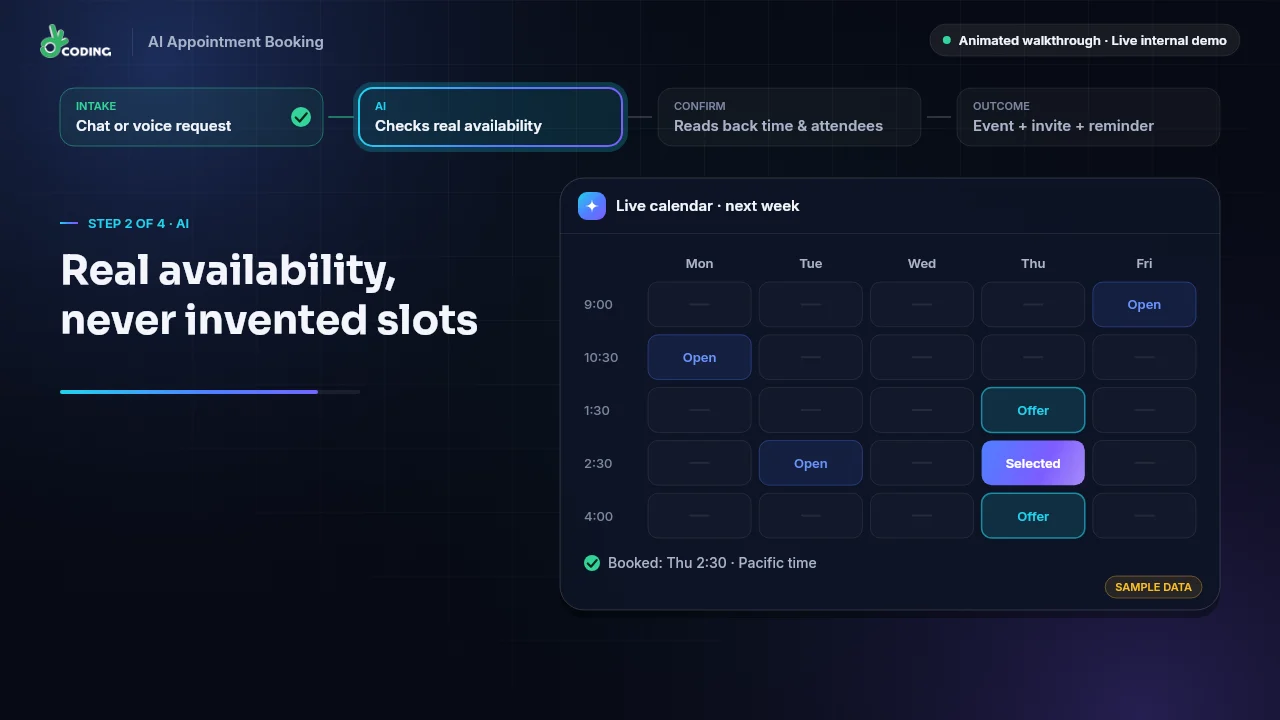
- Self-booking of consultation slots, so the prospect is not stuck in phone tag. See how this works in our appointment booking demo.
- Text-back after a missed call, so the caller knows the firm will follow up.
- Reminders before the consultation, and a follow-up if no one responded within your target window.
What should stay human: deciding whether to take a matter, anything resembling legal advice, fees, and sensitive conversations. An automated assistant should clearly say it is not a lawyer.
Set a response target and measure it
"Reply fast" is not a policy. Pick a specific target, such as "an automatic acknowledgment immediately and a personal reply within one business hour." Then measure three timestamps per lead: when it came in, when the first reply went out, and when the consultation was booked. After a few weeks you will see whether the problem is after-hours, one practice area, or one person. Our never miss a lead approach starts with exactly this measurement.
A simple setup for a small firm
A practical setup for a two-to-ten attorney firm:
- The website form collects contact details, practice area, opposing party, and a short description limited to a few sentences.
- On submit, the prospect gets an instant, attorney-approved acknowledgment with a booking link.
- The assigned person gets an alert by text or chat, with the details in one place.
- If nobody replies within your target window, a backup person is alerted.
- Every step is logged, so you can see response times by week.
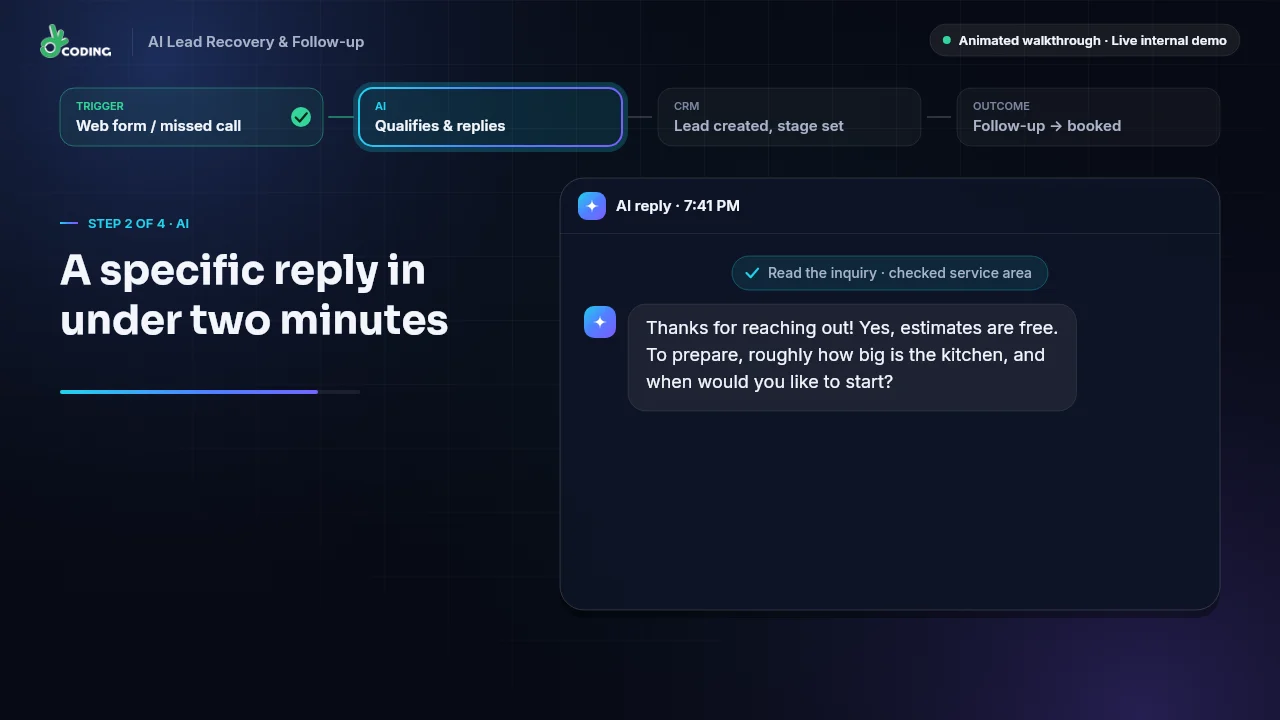
We build this kind of workflow for law firms on top of the tools they already use. You can see the lead follow-up side in our AI lead recovery demo.
Frequently asked questions
Is it ethical for a law firm to send automated replies?
An automated acknowledgment that confirms receipt and offers a consultation is common practice, but advertising and confidentiality rules vary by state. Have an attorney review the wording against your state bar's guidance.
How fast should a law firm reply to a new inquiry?
Set a target your team can meet every day, such as an instant acknowledgment and a personal reply within one business hour. Consistency beats an aggressive number you rarely hit.
What should the intake form not ask for?
Avoid asking for detailed facts, documents, or confidential information before you have run a conflict check. Collect names, the other party, the matter type, and contact details first.
If you want help setting up a faster, safer intake flow for your firm, book a free call with us.
This article describes approaches and how our demos behave. It does not report measured customer outcomes unless it says so with methodology and permission.